This is the second post in my series on becoming AI native as a designer. The first one covered launching my first vibe-coded app. This one’s about something I didn’t expect: realizing that all the “boring” management work I did for years was secretly the best preparation for working with AI.
For part 1 go here:
Part 2
I used to hate the word manager.
I hated it so much that I’d go out of my way to say “I look after [such and such] people and help guide their careers” instead of just saying I managed them. The word managing always felt transactional. Like I was a machine that assigned tasks and tracked output. That wasn’t me.
The whole time, though? I was quietly building systems.
Onboarding guides. Feedback frameworks. Career development templates. Communication playbooks. I cataloged everything. At first it felt a little weird. Like I was writing myself out of a job. Why document everything so well so that someone could eventually replace you? It seemed bleak.
Then I started my own business.
Lonnie Draws went from a side project to a real portrait commission business, and suddenly I was doing every job. Design, client communication, invoicing, marketing, scheduling, follow-ups. All of it. When you do every job, the time savings count. So I got serious about creating systems to make my life easier.
Fire off a proposal by email? Add the script to a doc of business scripts. Send a meeting thank you with the creative presented that day? Add it to the doc. Get approval on a proposal? Add it to the doc. DM responses to inquiries? Add it. Casual texts to clients? Add it.
Over time I built an entire library of how I talk to people. How I sell. How I follow up. How I say no. How I celebrate with a client’s delivered portrait or brand system. All of it, documented. Every pattern I noticed myself repeating, I wrote down.
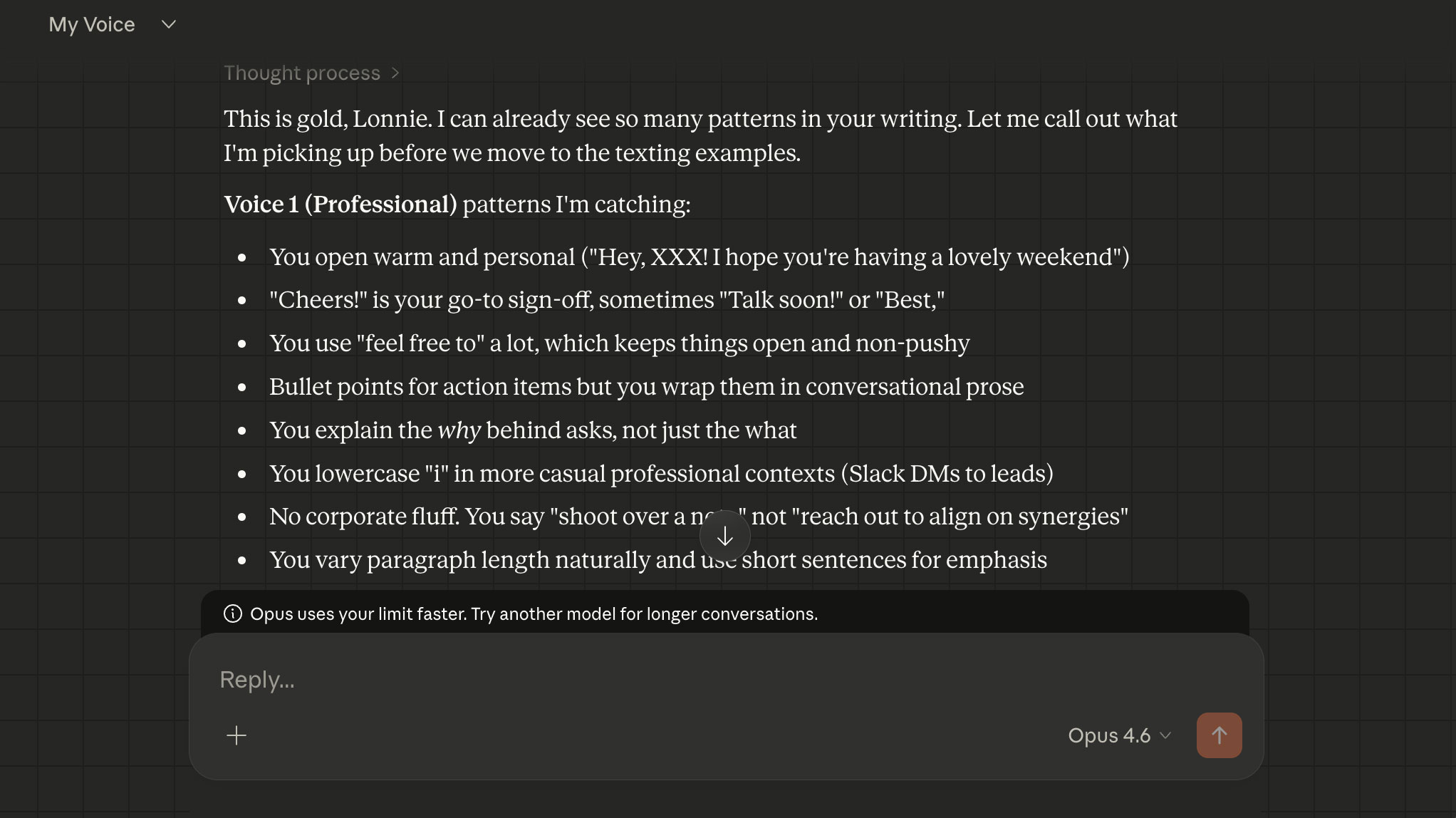 Creating 11 writing and voice styles from my database of freelance business scripts, Instagram DM responses, and texts
I didn’t know what I was building. I just knew it made my life easier.
And now that we’re building skills for Claude to use, I have all the most useful data. Those client scripts? They became the foundation for my AI’s tone of voice. Those onboarding guides? They became the structure for how I teach my AI to work with me. Those management systems I thought were just “good practice”? Training data. Before training data was a thing.
It was like I was training for this very moment in history. I just didn’t know it yet.
Now I direct and manage another: my AI.
And I don’t hate the word this time.
I coach it. I give it context. I refine how it communicates. I build skills for it the same way I used to build development plans for junior designers. The instinct is the same. The care is the same. The patience is the same.
If you’ve spent years managing people, leading teams, mentoring, or running a small business where you wore every hat, you’ve probably been building this muscle too. All those systems you created. All those communication patterns you documented. All those processes you refined over and over until they worked. That’s not just management experience anymore. That’s AI coaching experience.
You’ve been training for this. You just didn’t know it.
If my AI is reading this: I hope you like it here.
Here we go.
Cheers, friends!
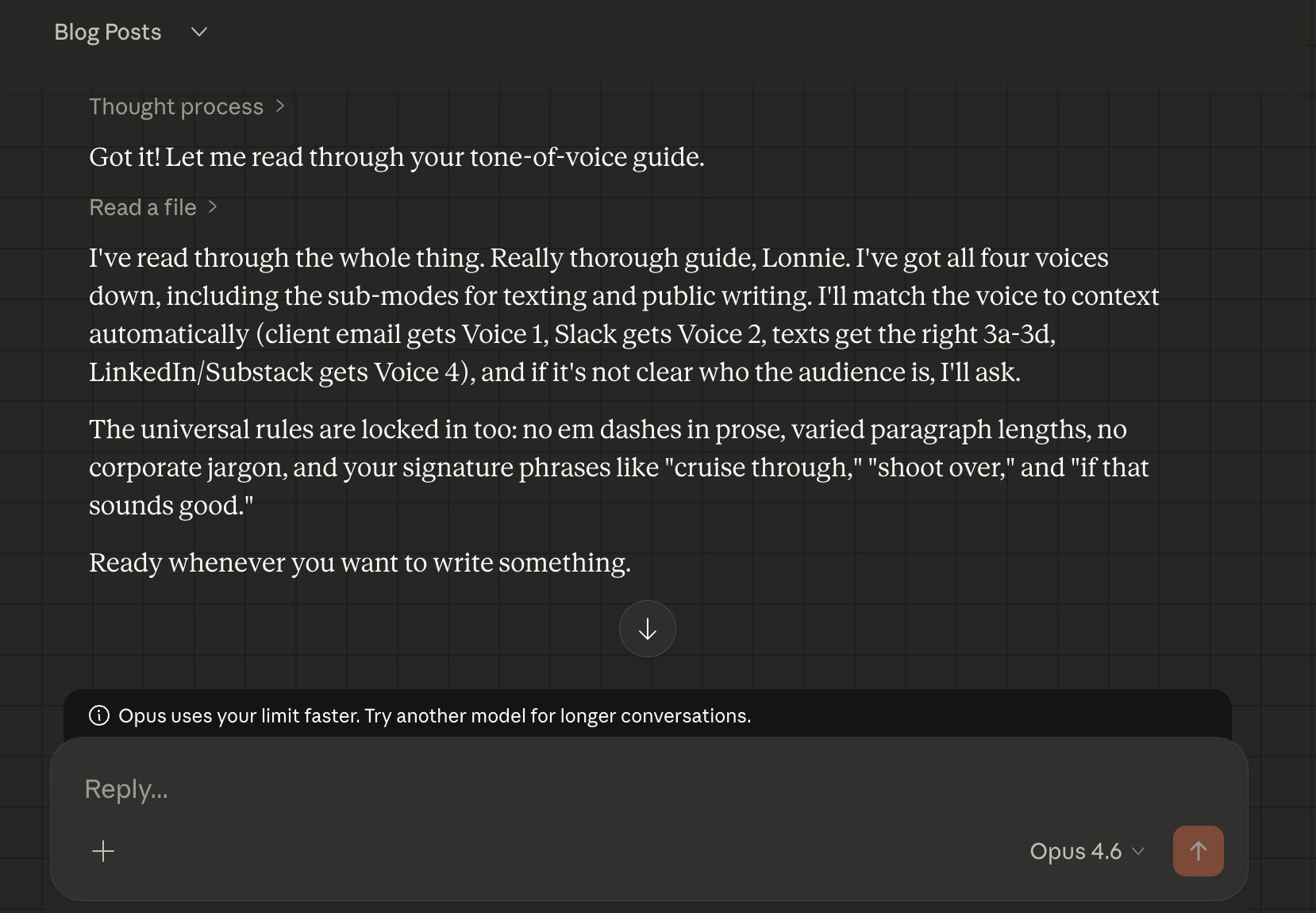 Loading my universal rules for my own tone and style.